
General Anthurium Care
Growing Tips for the New Velvety Anthurium Parent
By now you have likely unwrapped your gorgeous Anthurium and are praying to the plant gods that you don’t kill it. Your plant, while it (should) look fabulous, is feeling a little stressed from being shipped in a dark box. Just like you would like a nap or a relaxing bath after a long trip, your very sensitive Anthurium needs to acclimate before being placed in its more permanent location. After acclimating, growing an Anthurium requires a lot of flexibility, tweaking and experimenting with what growing conditions work best for you.
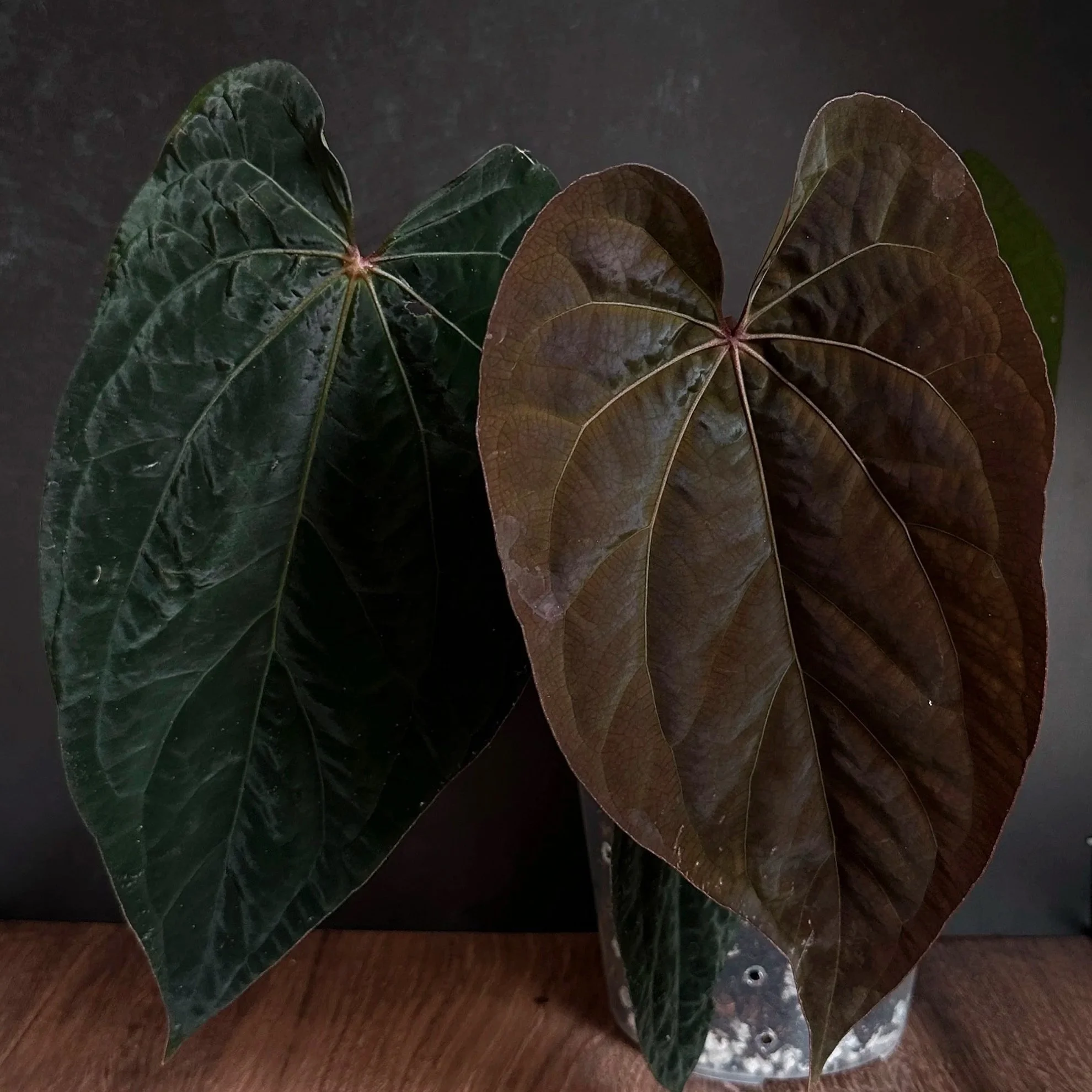
My Anthurium antolakii nicknamed “Lorde”
Not all Anthuriums are created equal however. The common Anthuriums that you will find in the grocery store that are prized for their bright red flowers are notably easier to take care of than their moodier, velvelty rare-plant counterparts. The velvets, and the highly sought after textured Anthurium Luxurians and its hybrids are what I am describing the care routine for in this article. Here’s what to do over the next couple weeks with your new beauty so you don’t have to rely on the plant gods hearing your calls for help in order to succeed:
STEP ONE: REST AND RECOVERY AFTER SHIPPING
The key to pampering your rare Anthurium upon arrival is humidity. Put this baby (or babies if you bought multiple) in as high of humidity as you can, under a cloche, in a large clear storage box, in an IKEA cabinet, or in a grow tent. The key is, wherever you place it, to make sure the humidity is between 70-100% in this temporary enclosure. You can test the humidity using a cheap little hygrometer available on Amazon. Keep it in this high humidity enclosure for at least a week until it recovers from the shock of being shipped.
Water your plant during this time only if the potting medium appears to dry out completely on the top inch or two (the substrate on top will turn a lighter brown color as it starts to dry and if you pick up and squeeze a piece of brown rectangle coco husk from the top layer, you won’t be able to squeeze any water out of it). If you determine the top layer is totally dry, only then should you give it a good soaking. I like to both top and bottom water mine.
STEP TWO: ACCLIMATIZING YOUR PLANT TO PERMANENT GROWING CONDITIONS
After a week or two of allowing your plant to recover in a high humidity environment , begin to move your plant into its more permanent location. If its permanent location is significantly less humid than its last location (for example 50% Relative Humidity) transition it gradually or your plant will suffer from the shock and may look like wilted spinach one day. For example, this may look like cracking the lid to the propagation box open a centimeter more each day until one day it is fully open. This type of slow-transition is very effective at minimizing shock to the plant.
It is always helpful, but not necessary to know the growing conditions of your plant prior to arriving at your house. This is more for your own learning purposes, not because you need to imitate those exact conditions in order to be successful. If your plant is from me, it was growing in a grow tent at around 70-80% humidity 1.5-3 feet under 2 T8 grow light bulbs with fans running during the day for airflow. It’s also possible your plant came from within a propagation box in 100% humidity. Either way, it came from very high humidity/ greenhouse like conditions, as most plants do from professional growers.
Humid home environments (if you live by a large body of water), or rooms with humidifiers and fans, grow tents (like those from AC Infinity/Vivosun) or cabinets (like IKEA Milsbo cabinets) with fans for air circulation will make the most ideal environment long term for Anthuriums. 60-80% humidity is ideal, but some hardier hybrids and shiny-leafed Anthuriums do fine acclimating to 20-50% humidity. Here’s a link to some of the grow tents and equipment I personally use from AC Infinity. You can use my code PLANTBABIES on their site for 10% off. I grow almost all of my anthuriums in their tents using their 69 controller pro (which is basically a thermostat) to automatically track humidity and temperature and turn the fans and AC infinity humidifier on and off accordingly.
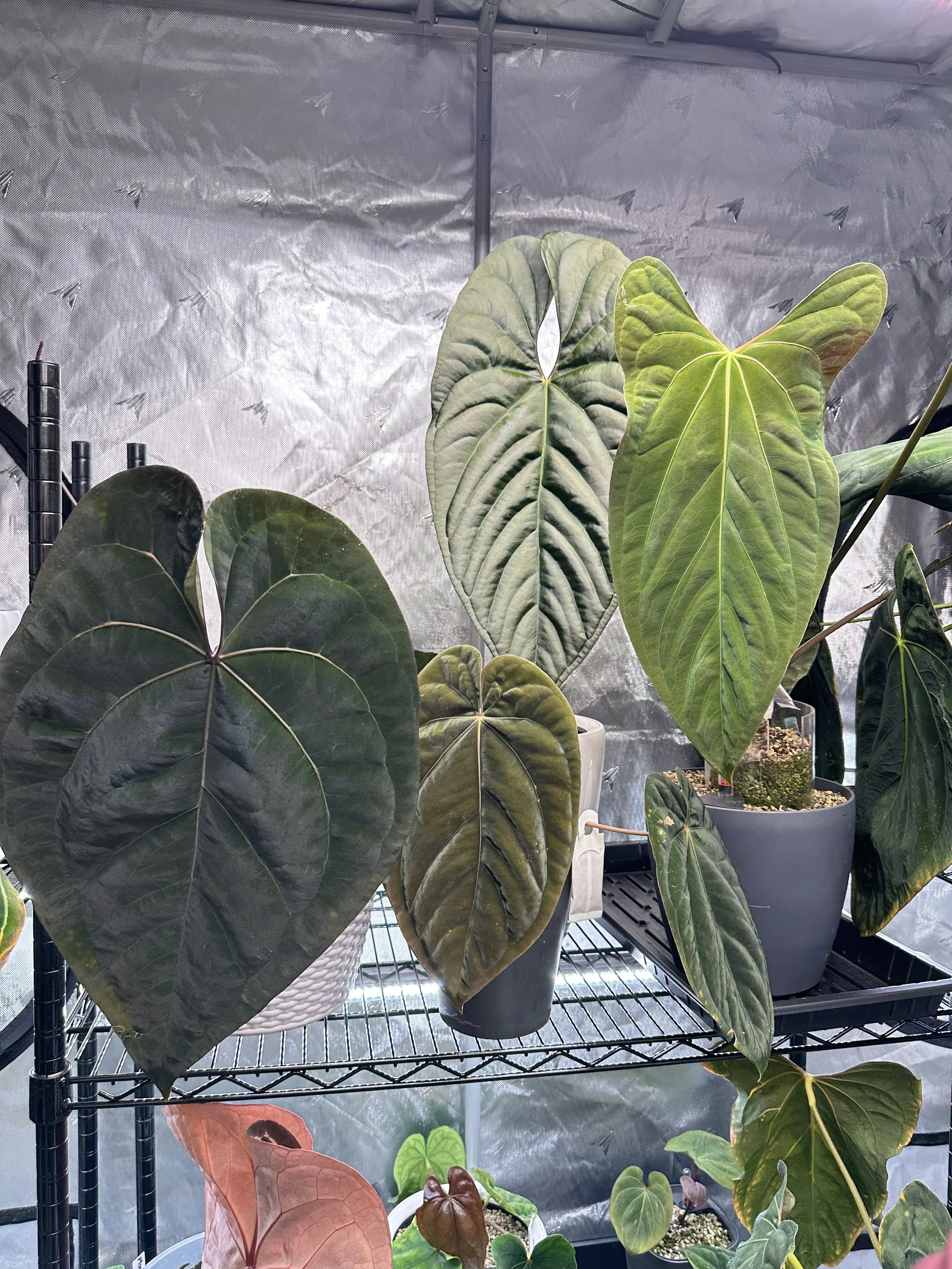
Some of my mother plants growing in an 8×10 AC Infinity Tent
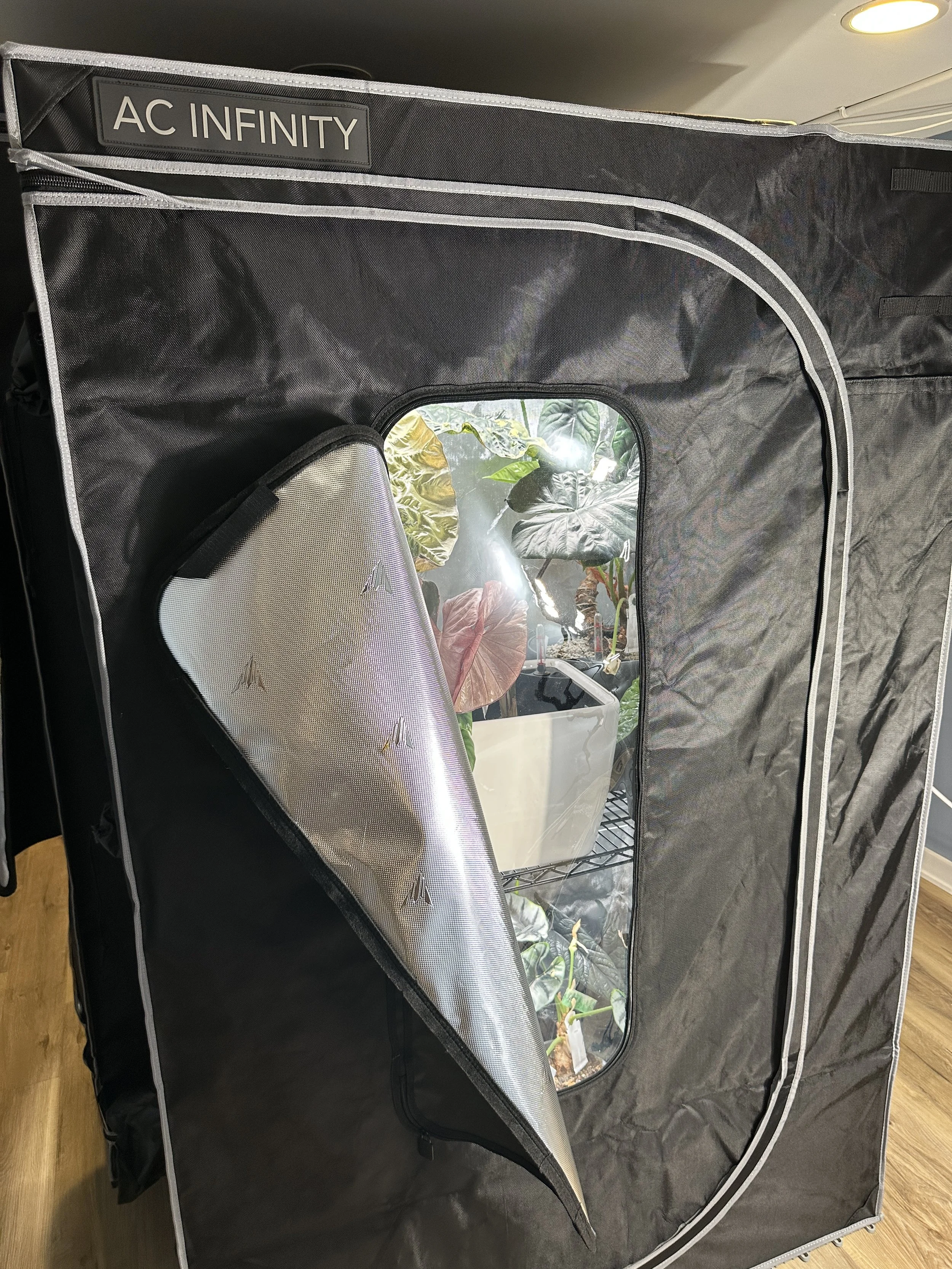
Your plant baby came from a tent like this before flying to you!
People often ask me about grow lights and Anthuriums. Here is the key: there is no set rule. As with any plant the more light you give it, the faster it will grow. The less light, the darker the leaves but the slower it will grow. If you want to be more exact with your growing, I recommend purchasing a PAR meter in order to measure your growlight’s output, but it’s totally not necessary if you don’t WANT to get that granular. . Instead, start with two 2 or 4 foot Barrina T8’ buls about 2 feet away from your plants and see what happens for a few weeks. If your foliage turns light green - your plants are growing too close to the light. Move the plants further from the light, or take away a bulb, or buy light blocking stickers. EXPERIMENT. ENJOY THE HOBBY! Check out my post on Growlights.
I’m a Soltech, Barrina and Sansi grow light brand girl, through and through. No need to buy anything other than those three brands…they cover all your needs and price points.
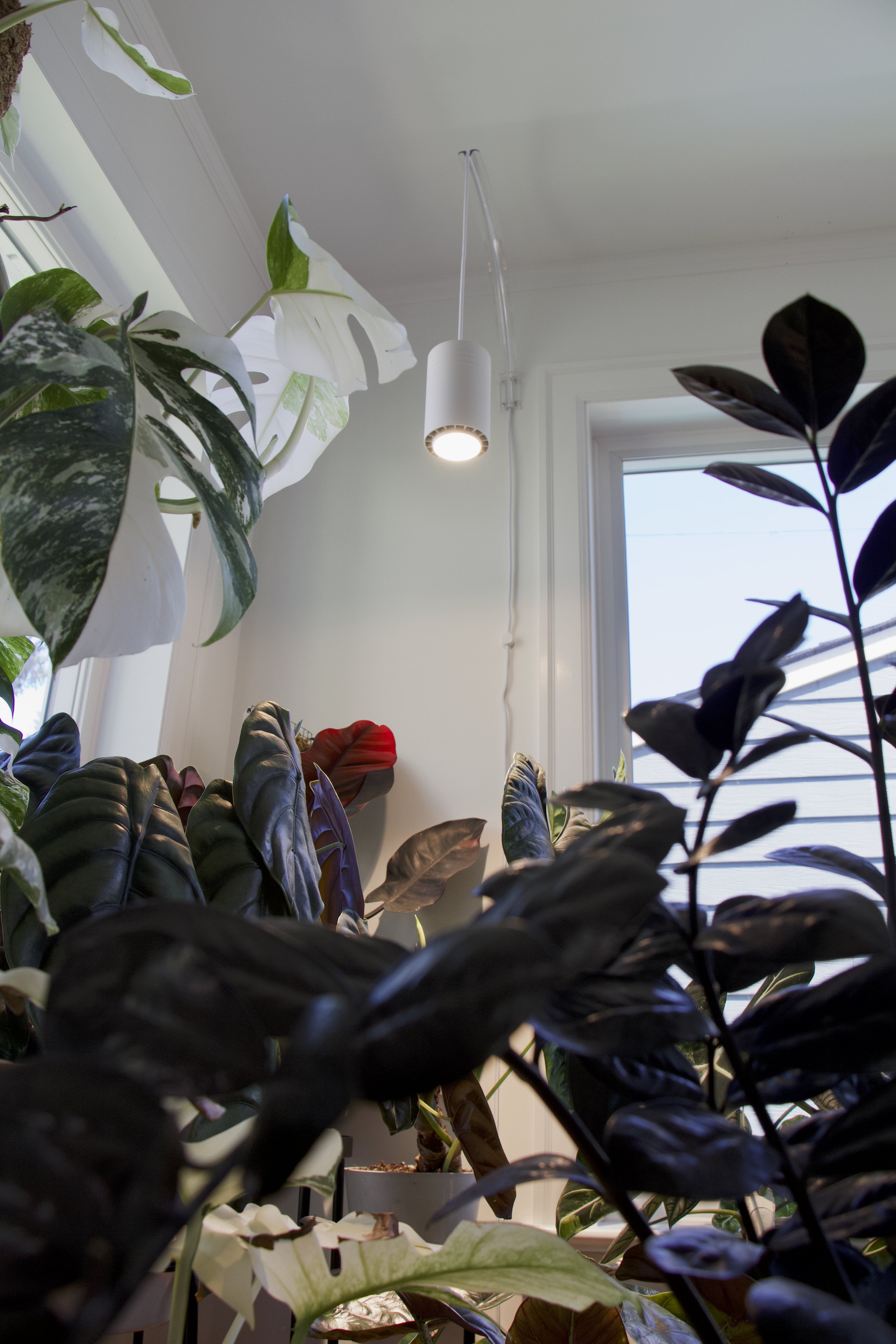
This is my Soltech large pendant light. My aroids bloom like crazy under them. This one is going strong for SIX years! Use my code PLANTBABIES for a discount on their site. Their products are worth every penny as they’re high quality and durable.
STEP THREE: CARING FOR IT IN ITS PERMANENT HOME
Continue to water your Anthurium whenever it is almost, but not completely dry, using whatever method works best for you. I mentioned one good way above, but some people like to use clear pots, and some people like to skip the guesswork altogether and pot up their Anthuriums in Lechuza pon in a semi-hydro pot (this is a whole other discussion for another day - but I highly recommend this). Remember - they love to get almost dry, but never to dry out fully or their roots will whither. This is why semi-hydro pots are such a safe bet for them and you; they will drink the right amount of water that they need, when they need it.
Experiment and learn and have fun. You will know it’s time to repot it up a pot size when the roots start filling up the pot / wrapping around the inside of the pot / popping out on top of the pot/ peeking out the bottom holes. The roots will speak to you!
Please don’t forget to tag me in progress photos on social media if you partake. I highly recommend the Anthurium Facebook groups as the experts are in there always willing to share knowledge (even though there is the occasional bit of drama). This hobby is so much fun because of the people we get to connect with and the plant progress we get to celebrate and share (as well as the hardships). Keep in touch and go on with your bad planty self.
For more Anthurium growing information, and to learn how to propagate and pollinate them, check out my book, The Ultimate Guide to Houseplant Propagation .
